Reagent documentation
Scientific description
Structure, physicochemical data, analytical verification and safety documentation for SLU-PP-332. Supplied for in-vitro laboratory research only.
Reagent overview
Reagent
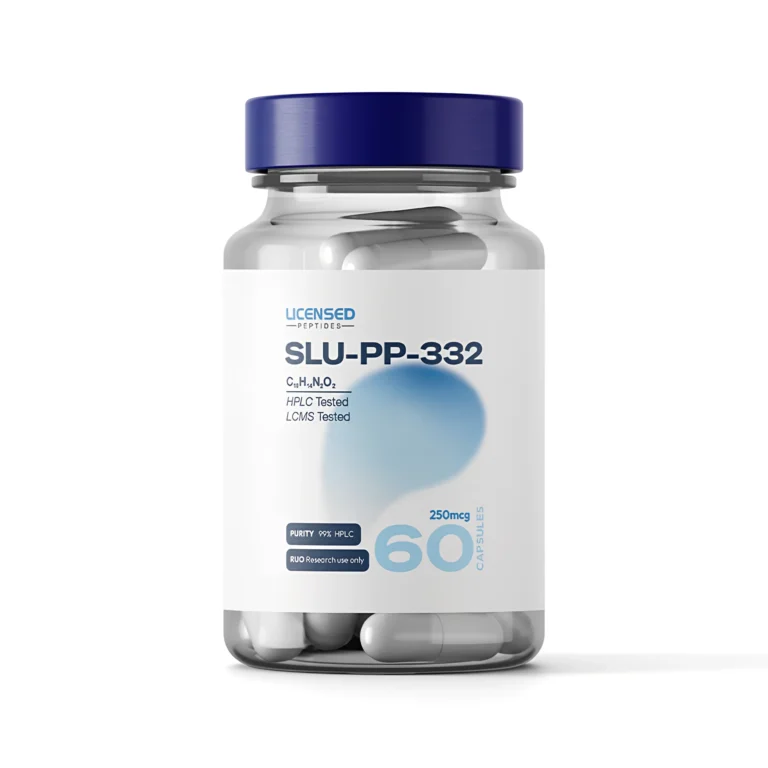
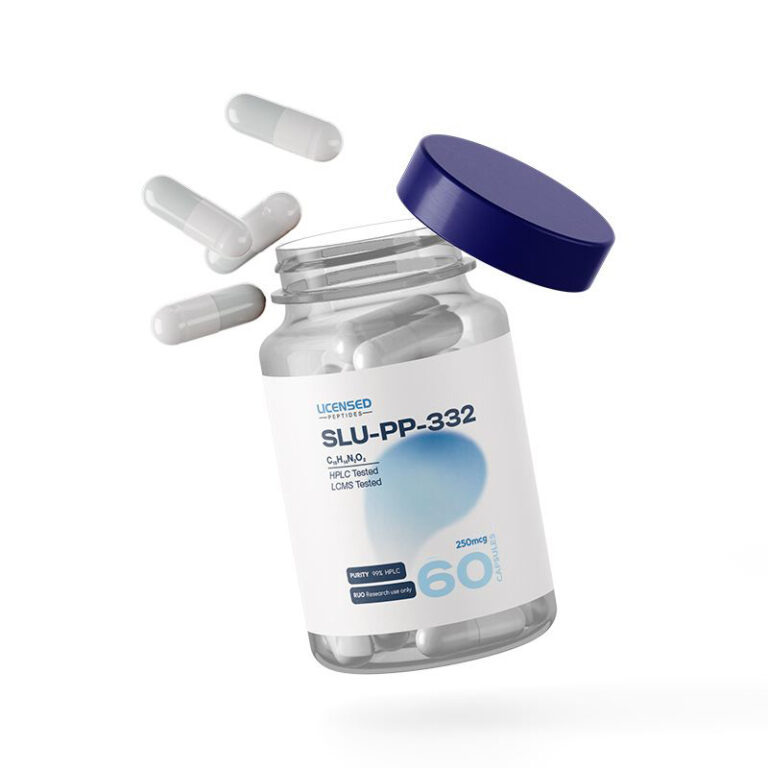
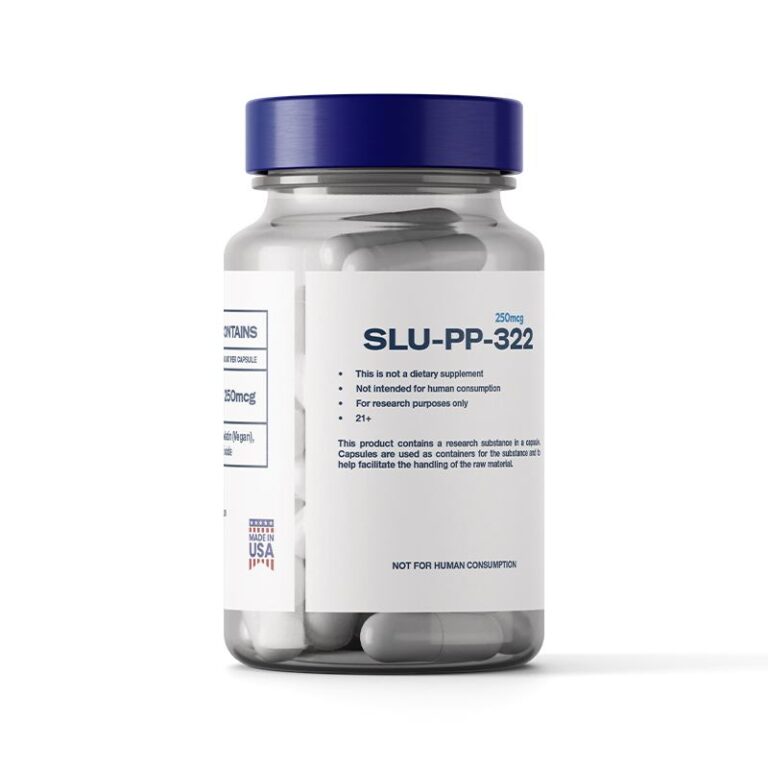
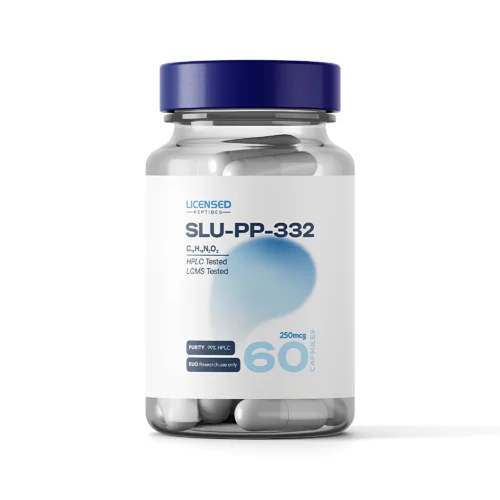
SLU-PP-332 Encapsulated Research Formulation 250mcg
Composition
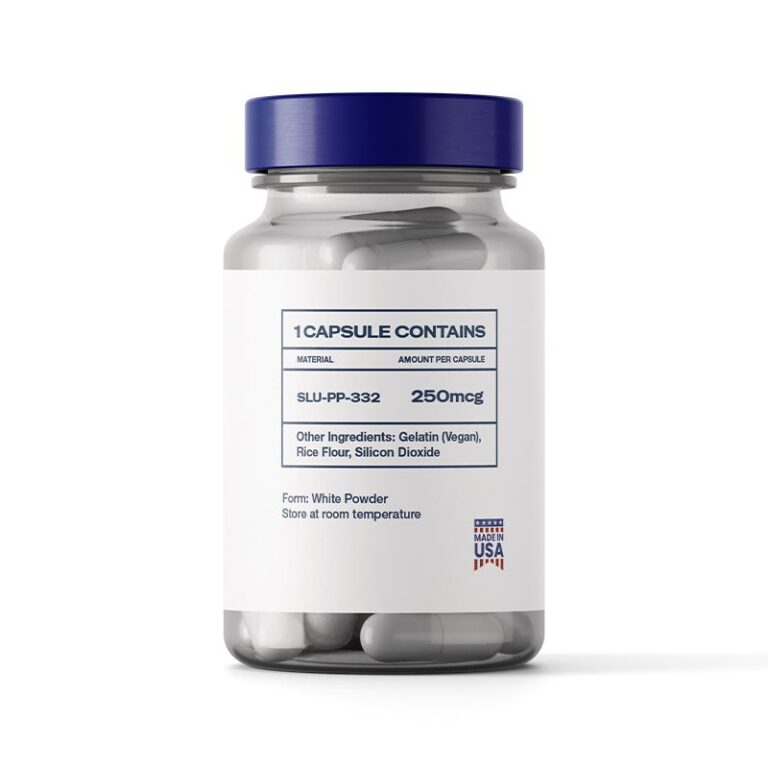
Per unit: 250 mcg SLU-PP-332
60 units per bottle
Form
Encapsulated research formulation, 60 units per bottle
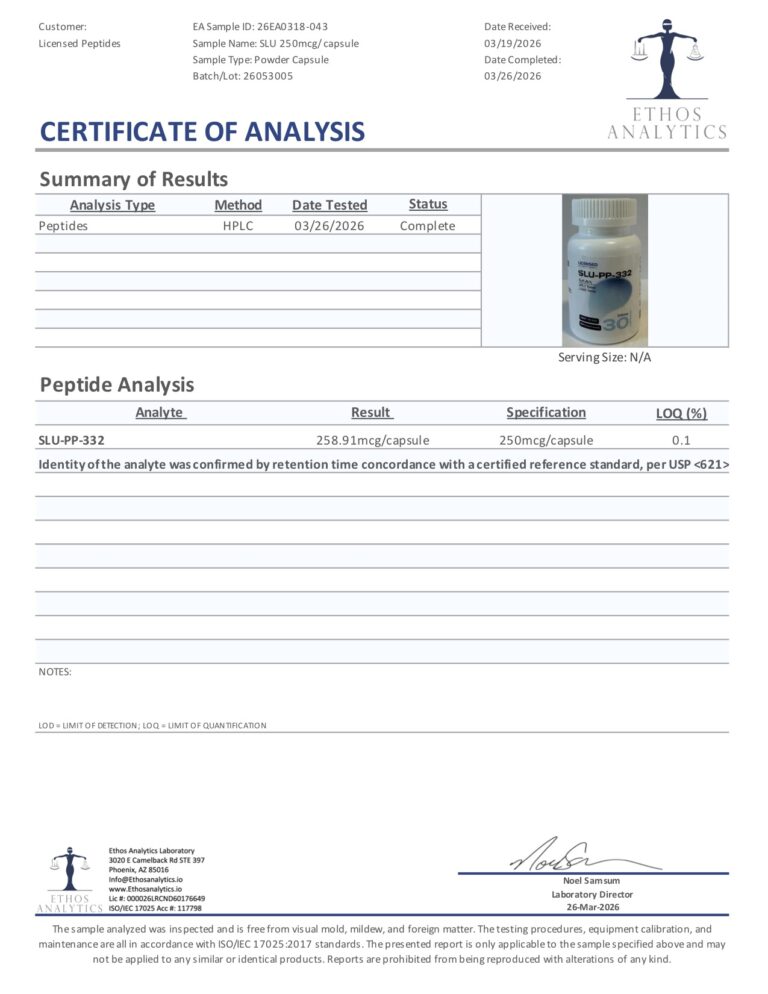
Content, current lot
258.91 mcg per unitSpecification 250 mcg per unit
Lot on file
26053005-GW6Released 03/26/2026
Testing laboratory
Ethos Analytics
Molecular structure
Two-dimensional structures generated with RDKit and drawn in the site palette. Tap a drawing to enlarge it.
SLU-PP-332 Synthetic aryl hydrazone
 Tap to enlarge
2D depiction, C18H14N2O2, generated from the PubChem connection table, CID 5338394.
Physicochemical data
Formula, masses and identifiers from PubChem where a record exists, checked against an independent RDKit calculation and, for peptides, against the residue sequence.
SLU-PP-332
Molecular formula
C18H14N2O2
Average molecular weight
290.3 g/mol
Monoisotopic mass
290.106 Da
InChIKey
RNZIMBFHRXYRLL-XDHOZWIPSA-N
Substance class
Synthetic small molecule (aryl acylhydrazone)
Solubility
Quantitative solubility not determined
Storage and handling
Store in the original sealed bottle, dry and protected from light, at the temperature stated on the label.
Shelf life
Refer to the lot Certificate of Analysis; re-test date assigned per lot
Analytical verification, lot 26053005-GW6
Tests reported for the current lot on file by Ethos Analytics (released 03/26/2026): HPLC (content against the specification). Only the tests listed below are part of this lot's report.
| Test | Method | Result |
|---|
| Content (label claim 250 mcg per unit) | HPLC | 258.91 mcg per unit |
Safety Data Sheet (SDS)
GHS-format safety data sheet, 16 sections. Revision 2026-11-04, version 1.0. "No data available" is stated wherever no measured data exist for the substance.
1.Identification
- Product identifier
- SLU-PP-332
- CAS number
- 303760-60-3
- Product form
- Solid, supplied by Licensed Peptides in sealed research packaging; the format of each product is stated on its product page.
- Recommended use
- Laboratory research reagent for in-vitro use by qualified researchers
- Restrictions on use
- Not for human or veterinary use. Not a drug, food, cosmetic or household product.
- Supplier
- Licensed Peptides, Inc., 1489 W Palmetto Park Rd, Boca Raton, FL 33486, USA
- Supplier contact
- service@licensedpeptides.com, +1 (855) 322-2214 (Mon to Fri, 8:30 AM to 6:30 PM ET)
- Emergency telephone
- +1 (855) 322-2214 (Mon to Fri, 8:30 AM to 6:30 PM ET). For a medical emergency contact local emergency services or a poison control centre.
2.Hazard identification
- GHS classification
- Not classified under GHS (Rev. 9) on the basis of the data available for this substance.
- Signal word
- None
- Hazard statements
- None assigned
- Precautionary statements
- None assigned. Handle as a laboratory chemical of unknown toxicity: avoid dust formation, avoid contact with eyes, skin and clothing, do not swallow.
- Other hazards
- Fine lyophilised powder may form dust. No data available on other hazards.
3.Composition / information on ingredients
- Substance / mixture
- Substance (synthetic small molecule); may contain residual water
- Chemical name
- Synthetic aryl hydrazone
- CAS number
- 303760-60-3
- Molecular formula
- C18H14N2O2
- Concentration
- Content as stated on the lot Certificate of Analysis (see /lab-reports/).
- Impurities contributing to classification
- None known
4.First-aid measures
- General advice
- Show this safety data sheet to the attending physician. Remove contaminated clothing.
- If inhaled
- Move the person to fresh air. If breathing is difficult, obtain medical attention.
- In case of skin contact
- Wash with plenty of soap and water. Obtain medical attention if irritation develops or persists.
- In case of eye contact
- Rinse cautiously with water for several minutes. Remove contact lenses if present and easy to do. Continue rinsing. Obtain medical attention if irritation persists.
- If swallowed
- Rinse mouth with water. Do not induce vomiting. Obtain medical attention.
- Most important effects, acute and delayed
- No data available.
- Indication of immediate medical attention
- No data available. Care at the discretion of the attending physician.
5.Fire-fighting measures
- Suitable extinguishing media
- Water spray, dry chemical, carbon dioxide or alcohol-resistant foam, chosen for the surrounding fire.
- Unsuitable extinguishing media
- None known.
- Specific hazards
- Organic powder; combustion may release carbon oxides and nitrogen oxides.
- Advice for fire-fighters
- Wear self-contained breathing apparatus and full fire-fighting gear.
6.Accidental release measures
- Personal precautions
- Avoid dust formation. Wear gloves, eye protection and a laboratory coat. Ensure adequate ventilation.
- Environmental precautions
- Do not let the substance enter drains. Quantities supplied are milligram scale.
- Containment and clean-up
- Sweep up or wipe with a damp cloth without creating dust, place in a closed container for disposal, then clean the area with water.
7.Handling and storage
- Precautions for safe handling
- Handle in a laboratory setting by trained personnel. Avoid dust formation and contact with skin and eyes. Wash hands after handling. Keep the vial closed when not in use.
- Conditions for safe storage
- Store lyophilised at -20 °C in the original sealed vial, desiccated and protected from light. Keep away from strong oxidising agents. Short periods at ambient temperature during shipping are tolerated by the lyophilised powder.
- Specific end use
- Laboratory research reagent only.
8.Exposure controls / personal protection
- Occupational exposure limits
- None established for this substance.
- Engineering controls
- Handle the powder in a fume hood or ventilated enclosure. Eyewash station and safety shower should be available.
- Eye / face protection
- Safety glasses with side shields or chemical goggles (EN 166 or ANSI Z87.1).
- Skin protection
- Nitrile gloves inspected before use; laboratory coat.
- Respiratory protection
- Not normally required when handled in a fume hood. For dust-forming operations outside a hood use a particulate respirator (N95 or P2 type).
- Hygiene measures
- Do not eat, drink or smoke in the laboratory. Wash hands after handling.
9.Physical and chemical properties
- Appearance
- Solid powder (colour per lot COA)
- Odour
- Odourless
- Molecular formula
- C18H14N2O2
- Molecular weight (average)
- 290.3 g/mol
- Monoisotopic mass
- 290.106 Da
- Solubility
- Soluble in water (supplier specification). Quantitative solubility: no data available.
- pH, melting point, boiling point, flash point, vapour pressure, density, partition coefficient, auto-ignition temperature, decomposition temperature, viscosity
- No data available
- Flammability
- No data available (organic powder, not expected to be readily flammable)
10.Stability and reactivity
- Reactivity
- No data available.
- Chemical stability
- Stable under the recommended storage conditions (lyophilised, -20 °C, desiccated, protected from light).
- Possibility of hazardous reactions
- None known.
- Conditions to avoid
- Moisture, prolonged exposure to light and elevated temperature; repeated freeze-thaw of solutions.
- Incompatible materials
- Strong oxidising agents, strong acids and bases.
- Hazardous decomposition products
- None known under normal storage. Combustion: carbon oxides and nitrogen oxides.
11.Toxicological information
- Acute toxicity
- No data available for this substance (all exposure routes).
- Skin corrosion / irritation
- No data available.
- Serious eye damage / irritation
- No data available.
- Respiratory or skin sensitisation
- No data available.
- Germ cell mutagenicity
- No data available.
- Carcinogenicity
- No data available. Not listed by IARC, NTP or OSHA.
- Reproductive toxicity
- No data available.
- Specific target organ toxicity (single and repeated exposure)
- No data available.
- Aspiration hazard
- No data available.
- Additional information
- This safety data sheet does not describe biological activity. The substance has not been evaluated for any use other than in-vitro laboratory research.
12.Ecological information
- Ecotoxicity
- No data available.
- Persistence and degradability
- No data available.
- Bioaccumulative potential
- No data available.
- Mobility in soil
- No data available.
- Other adverse effects
- No data available.
13.Disposal considerations
- Waste from residues
- Dispose of as laboratory chemical waste through a licensed waste disposal contractor in accordance with local, state and federal regulations. Do not discharge to drains.
- Contaminated packaging
- Dispose of as unused product. Rinsed glass vials may be recycled where local rules allow.
14.Transport information
- UN number
- Not assigned
- UN proper shipping name
- Not regulated as a dangerous good
- Transport hazard class
- Not applicable (DOT, IATA, IMDG)
- Packing group
- Not applicable
- Environmental hazards
- Not classified as a marine pollutant
- Special precautions
- Ship cold-packed; the lyophilised powder tolerates short periods at ambient temperature.
15.Regulatory information
- United States (FDA)
- This substance is not approved by the US Food and Drug Administration as a drug, food, dietary supplement or cosmetic. It is supplied for in-vitro laboratory research only and is not for human or veterinary use.
- OSHA Hazard Communication Standard (29 CFR 1910.1200)
- Not classified as hazardous on the basis of available data.
- TSCA (US)
- Not evaluated. Supplied in research quantities only.
- SARA 302 / 313, California Proposition 65
- Not listed.
- Other
- Purchaser must be 21 years of age or older and a qualified researcher. The product may not be used in or on humans or animals.
16.Other information
- Revision date
- 2026-11-04
- Version
- 1.0
- Prepared by
- Licensed Peptides, Inc. (regulatory and quality documentation)
- Data sources
- PubChem CID 5338394 (formula, average and monoisotopic mass, InChIKey RNZIMBFHRXYRLL-XDHOZWIPSA-N); lot Certificate of Analysis for purity and content; GHS Revision 9 for section structure.
- Disclaimer
- The information in this safety data sheet is believed to be accurate as of the revision date and is provided for guidance on safe handling, storage and disposal in a laboratory setting. It is not a specification and does not constitute a warranty. The recipient is responsible for determining the suitability of the substance for the intended research application and for compliance with all applicable regulations.
Intended use. This product is not a drug, food, dietary supplement or cosmetic. It is supplied as an encapsulated research formulation (laboratory reagent) for in-vitro research by qualified researchers only and is not for human or veterinary use. The statements on this page have not been evaluated by the US Food and Drug Administration, and the product is not intended to diagnose, treat, cure or prevent any disease. Purchasers must be 21 years of age or older. Licensed Peptides is a chemical supplier, not a pharmacy.



 99%+ Every Batch
 Often Not Disclosed